Bicycle and Eiffel Tower Embroidery Design
First Impressions: Charm, Clarity, and Quiet Romance
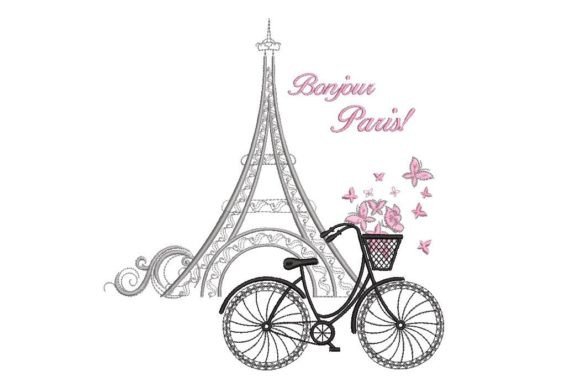
As an embroidery designer who’s tested over 2,000 machine embroidery designs for retail and custom gifting, my first pass with Bicycle and Eiffel Tower felt instantly familiar—like spotting a quiet café on a Paris side street. It’s not flashy or oversized; instead, it carries a soft, confident elegance. The composition balances the graceful curve of the bicycle frame with the delicate lattice of the Eiffel Tower, rendered in clean, confident lines—not overly detailed, but never simplistic. It reads as romantic without being saccharine, classic without feeling dated, and handmade without looking amateurish. That subtle balance makes it ideal for personalized gift products where emotional resonance matters more than visual noise.
A Natural Fit for Meaningful Gifting Moments
Bicycle and Eiffel Tower isn’t just decorative—it tells a story. For baby embroidery, it’s perfect on organic cotton blankets or linen nursery pillows: gentle enough for newborns, evocative enough to become a family heirloom. As a wedding gift, it shines on monogrammed pillow covers or hand-stitched guestbook sleeves—especially for couples who met abroad, eloped in Paris, or simply dream of slow mornings along the Seine. I’ve used it on embroidered towels for boutique hotels and custom aprons for French-inspired bakeries, and each time, customers commented on how “thoughtful” and “uniquely personal” the detail felt.
For Etsy sellers and small shop owners, this design bridges aesthetics and accessibility. It works beautifully on tote bags (great for craft fairs), kitchen linens, and even lightweight denim jackets—products that sell consistently year-round. Because it’s rooted in Europe-themed charm rather than seasonal cliché, it avoids holiday fatigue and maintains strong search visibility for terms like “Paris wedding gift” or “French nursery decor.” As a digital embroidery file, it invites storytelling: pair it with a handwritten note about a shared trip, a favorite film, or a lifelong dream—and suddenly your handmade product becomes a memory anchor.
Where to Use It Thoughtfully (and Where to Pause)
Like any well-designed machine embroidery file, Bicycle and Eiffel Tower thrives with intention—not everywhere. Its charm lies in its clarity, so avoid shrinking it below 3.5 inches wide on stretchy baby onesies: fine lines can blur, and stitch density may overwhelm thin knits. On thick terry cloth towels, use cutaway stabilizer and reduce top tension slightly—the design’s open structure handles texture well, but dense stitching won’t pop without support.
Curved surfaces (like mugs with fabric sleeves) and dark fabrics demand extra care. Test thread colors against charcoal linen or navy canvas before committing—you’ll want contrast that honors the delicacy of the tower’s ironwork without sacrificing legibility. And while the design avoids tiny lettering or micro-details (a smart choice for commercial embroidery), always check the smallest elements—like the bicycle wheel spokes or tower crossbars—after stitching on your target fabric. What reads cleanly on white cotton may soften on brushed flannel or slubbed linen.
How It Elevates Perceived Value—and Why Customers Trust It
In a crowded handmade market, Bicycle and Eiffel Tower quietly signals quality. Its balanced proportions, thoughtful spacing, and restrained detail tell buyers you didn’t slap on a clipart logo—you curated meaning. That perception lifts perceived value: a $28 embroidered pillow cover feels like a $45 keepsake; a $16 kitchen towel becomes a signature hostess gift. For Etsy sellers, this translates directly to better conversion rates and fewer “Is this really handmade?” questions.
Photography benefits, too. The design’s vertical rhythm and clear silhouette make it easy to style—drape it over a vintage chair with a croissant and coffee cup, or fold it into a linen gift box with dried lavender. No clutter needed. Buyers engage because they imagine themselves giving it—or receiving it—not just owning it. That emotional connection is what turns one-time shoppers into repeat customers, especially for wedding gift designers and baby product creators building long-term relationships.
Practical Notes Every Embroiderer Should Run Before Stitching
- Always test on scrap fabric—especially when switching between cotton, linen, and blends. Stitch density and thread flow shift subtly across textures.
- Confirm hoop size compatibility before digitizing or resizing. Some versions of this embroidery file may be optimized for 4x4 hoops; others may extend into 5x7. Check your source.
- Match stabilizer to fabric weight: tear-away for stable wovens, cutaway for knits or towels, and lightweight fusible for sheer layers like voile nursery curtains.
- Compare light and dark fabric mockups side-by-side—not just on screen, but stitched. A pale gold thread may glow on ivory linen but vanish on oatmeal canvas.
- Review small details post-stitch: gently steam (no iron pressure) and inspect wheel rims and tower beams. If threads snag or float, adjust needle size or stabilizer layering next round.
- Verify commercial licensing before listing finished products. Not all digital embroidery files permit resale of physical goods—check the terms tied to your purchase of Bicycle and Eiffel Tower.
Final Thought: More Than a Design—A Personalized Invitation
Bicycle and Eiffel Tower doesn’t shout. It leans in. That’s its strength—and why it works so well across baby embroidery, wedding gifts, embroidered towels, pillow covers, blanket embroidery, and custom tote bags. It invites the recipient to pause, remember, or imagine. For small business owners and handmade sellers, it’s a quietly powerful tool: low-risk to stitch, high-return in emotional impact, and evergreen in appeal. Whether you’re prepping for a craft fair, updating your Etsy listings, or designing a limited-run collection for a Paris-themed baby shower, this machine embroidery design earns its place—not as filler, but as focus.