Juneteenth 1865 Black History Month
A Practical Embroidery Designer’s Review for Small Business Use
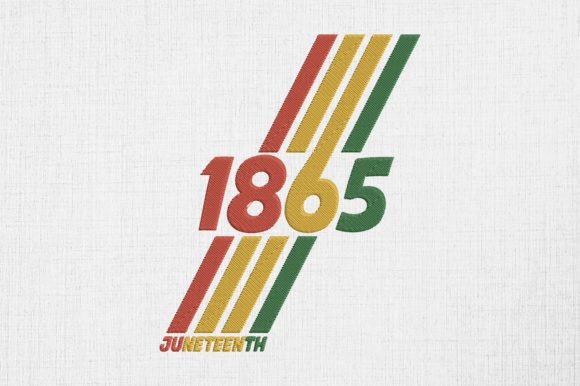
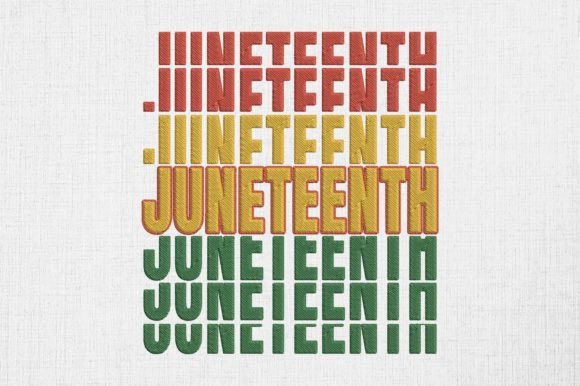
As an embroidery designer who’s developed hundreds of commercial designs for cafés, boutiques, bakeries, florists, and handmade brands, I approach every new machine embroidery design with two questions: Will it translate cleanly across real-world fabrics and applications? and Does it strengthen—rather than dilute—the brand identity of the small business using it? That’s why I took Juneteenth 1865 Black History Month through a full production review before recommending it to clients. This isn’t just another holiday-themed embroidery file—it’s a meaningful visual asset with serious potential for branded patch use, staff uniforms, and customer-facing merchandise.
First Impression: Professional, Respectful, and Visually Anchored
From the title alone—Juneteenth 1865 Black History Month—the design signals intentionality. It avoids trend-chasing clichés and instead grounds itself in historical specificity and cultural resonance. Based on the description (“will beautifully complement t-shirts, dresses, scarves, and home decor”), it reads as versatile but not generic: likely clean-lined, legible at scale, and balanced in composition. For small business merch, that means it lands as professional and respectful, not decorative or tokenistic. That distinction matters—especially when applied to aprons, caps, or tote bags used daily by staff and seen by customers.
Real-World Performance Across Business Applications
Juneteenth 1865 Black History Month works exceptionally well as an embroidered patch for local shops—think café aprons, boutique garment tags, or florist sleeve accents. Its thematic clarity makes it ideal for custom apparel where messaging aligns with values: a pet brand adding it to staff caps, a bakery stitching it onto reusable tote bags for Juneteenth weekend events, or a creative studio using it as a chest logo on limited-run work shirts.
- Apron embroidery: Holds up well on medium-weight cotton or canvas—especially when sized between 2.5"–3.5". The phrase structure allows natural spacing for readability at arm’s length.
- Cap embroidery: Works best on structured front panels (not curved bill seams) if digitized with moderate stitch density. Avoid overscaling tiny lettering—test at 2.25" width first.
- Tote bag design: Shines as a subtle lower-corner accent or centered back mark. Its dual-holiday reference adds depth without overcrowding.
- Product packaging accents: When stitched onto fabric labels or sewn-in tags, it elevates handmade product perception—especially for Etsy sellers emphasizing heritage and authenticity.
Where to Use Juneteenth 1865 Black History Month With Intention
This design earns its place in commercial embroidery—but not without thoughtful execution. Avoid applying Juneteenth 1865 Black History Month to very small patches (<2") unless you’ve verified legibility of “1865” and “Black History Month” in the actual embroidery file. Fine details or tight kerning can blur under thread tension. Similarly, cap fronts with heavy curvature may distort letterforms; always test on a mock hoop before bulk production.
On dark uniforms—like navy chef coats or charcoal aprons—review thread color contrast carefully. A single-tone embroidery file may lack sufficient pop without metallic or high-contrast thread choices. Also, consider fabric texture: highly napped fleece or loosely woven linen requires extra stabilizer to prevent shadowing or puckering, especially around dense lettering.
Frequent washing? Juneteenth 1865 Black History Month performs best on stable substrates—not lightweight knits prone to stretching. For items like reusable totes or staff tees meant for long-term wear, pair it with quality polyester thread and tear-away + cut-away stabilizer layers.
Impact on Brand Identity and Customer Trust
When used authentically, Juneteenth 1865 Black History Month does more than mark a date—it affirms alignment. Customers notice consistency: a florist who features it on staff aprons and seasonal gift tags builds recognition through repetition. A craft business using it across Etsy listings, printable mockups, and physical product labels strengthens visual cohesion—and signals that values aren’t seasonal add-ons, but part of operational DNA.
That consistency directly affects perceived professionalism and buyer engagement. A poorly executed or mismatched Juneteenth 1865 Black History Month—say, crammed onto a curved cap or faded on low-thread-count fabric—undermines trust. But when digitized well and placed intentionally, it elevates perceived value, supports storytelling, and invites deeper connection—especially among audiences who prioritize cultural awareness and small business authenticity.
Embroidery Designer Notes for Commercial Use
Before sending Juneteenth 1865 Black History Month to production, run these checks:
- Test in black and white first. Confirm legibility without color distraction—this reveals spacing, stroke weight, and outline integrity.
- Verify small patch viability. Resize to 2", 2.5", and 3"—then check if “1865” remains distinct and “Black History Month” doesn’t collapse.
- Review thread color contrast against your target fabric—especially for dark or textured materials.
- Inspect spacing and kerning between numbers and words. Tight lettering = higher risk of stitching errors.
- Confirm hoop size compatibility with your primary machines—especially if using multi-position hoops for batch patch work.
- Test on real fabric with your standard stabilizer stack. Cotton twill behaves differently than poly-cotton blends.
- Create a client-approved printable mockup before stitching—this prevents costly rework and sets clear expectations.
- Compare Juneteenth 1865 Black History Month beside other design assets (logos, fonts, icons) to ensure visual harmony within your brand system.
- Confirm commercial licensing before using Juneteenth 1865 Black History Month in paid merchandise, wholesale orders, or digital product bundles.
Remember: Juneteenth 1865 Black History Month is more than a Holidays category embroidery file—it’s a narrative tool. Used with care, it supports small business merch that resonates, endures, and honors. Whether you’re a solo craftsperson, a local embroidery shop, or a growing handmade brand, this machine embroidery design delivers substance alongside stitch—and that’s exactly what thoughtful commercial embroidery is built on.