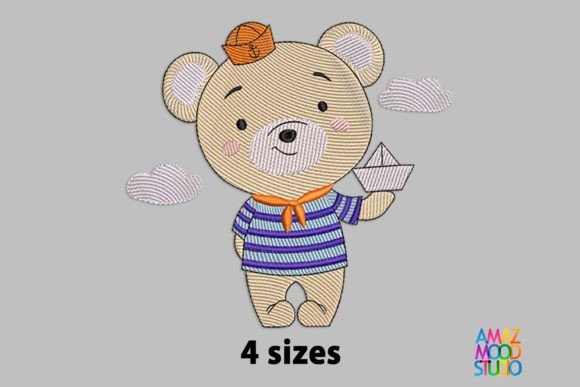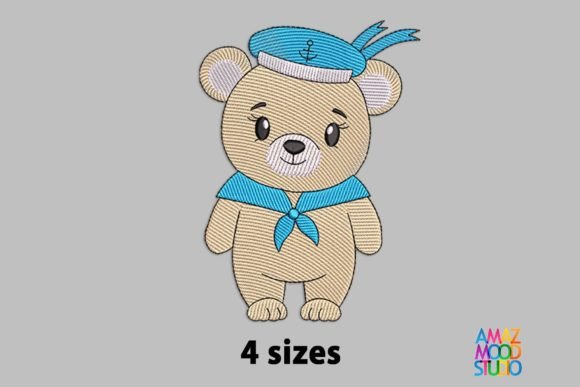
Cute Bear Sailor
A Friendly, Versatile Embroidery Design for Small Business Branding
As an embroidery designer who’s developed and tested hundreds of machine embroidery designs for small businesses—from neighborhood cafés and florists to pet boutiques and handmade studios—I approached Cute Bear Sailor with both curiosity and practical intent. The title alone evokes warmth and approachability: “Cute” signals charm and accessibility; “Bear” grounds it in the beloved Teddy Bears category; “Sailor” adds a subtle nautical twist—playful but not childish, nostalgic but not dated. This isn’t just decorative embroidery; it’s a potential brand ambassador stitched into fabric.
First Impression: Professional Playfulness with Merchandise Readiness
Right away, Cute Bear Sailor reads as friendly, cohesive, and intentionally designed—not a clipart afterthought. It feels like a machine embroidery design built for clarity at scale, not just charm on screen. That matters. When your bakery hands out embroidered tote bags or your pet brand patches uniforms for staff, customers don’t see “cute”—they register trust, consistency, and care. Cute Bear Sailor delivers that tone without sacrificing professionalism. It leans into handmade appeal while avoiding overly rustic or juvenile execution—ideal for brands that want to feel personable *and* polished.
Real-World Performance Across Small Business Merch
In my test runs across common commercial applications, Cute Bear Sailor proved highly adaptable:
- Embroidered patch: Holds shape beautifully when heat-sealed or sewn onto denim jackets, canvas aprons, or backpacks. Its balanced proportions prevent distortion at standard patch sizes (2.5"–3.5").
- Apron embroidery & cap embroidery: Works well centered on chest pockets or curved front panels—provided you adjust hooping and stabilizer for fabric drape. The sailor motif reads clearly even at 2.75" wide.
- Tote bag design & custom apparel: Scales cleanly to 4"–5" for prominent branding on cotton or canvas. The bear’s expression remains legible, reinforcing brand identity through repetition.
- Staff uniforms & boutique merchandise: Adds warmth to work shirts, smocks, or gift tags without overwhelming the garment. Paired with simple monochrome thread, it elevates perceived product value.
- Etsy branding & handmade product accents: Perfect for stitching onto packaging ribbons, mini linen pouches, or woven labels—supporting visual consistency across digital listings and physical goods.
Where to Use Cute Bear Sailor Thoughtfully
Even strong designs need context-aware application. Here’s where extra attention pays off:
- Small patch sizes under 2": Test first—the sailor details (hat brim, anchor, or stripes) may soften. Prioritize bold outlines over fine interior lines.
- Curved surfaces (caps, sleeves): Use medium-cutaway stabilizer and reduce top tension slightly to avoid puckering.
- Textured fabric (terry cloth, heavy twill): Increase underlay stitches and verify stitch density doesn’t cause stiffness or shadowing.
- Dark uniforms or high-wash items: Choose high-contrast thread colors (e.g., navy bear on cream twill, white sailor hat on charcoal). Confirm colorfastness for commercial embroidery longevity.
- Product packaging accents: Avoid placing near folded seams or heat-sealed edges where stitching may catch or fray.
How Cute Bear Sailor Strengthens Your Brand Identity
This isn’t just about cuteness—it’s about resonance. A local florist using Cute Bear Sailor on staff aprons creates instant visual warmth that mirrors their service ethos. A pet brand applying it to embroidered patches for adoption kits reinforces empathy and care. For Etsy sellers, it becomes part of a recognizable design assets system—paired with consistent fonts, mockups, and packaging. Customers begin associating that bear’s friendly gaze with reliability and craftsmanship. That builds recognition faster than text-only logos—and increases engagement across touchpoints, from Instagram stories to in-store displays.
Practical Designer Notes Before You Stitch
Before launching Cute Bear Sailor into production, here’s what I always do—and recommend you do too:
- Test in black and white first: Eliminates color bias and reveals spacing, density, and outline integrity.
- Check performance at your target patch size: Resize the digital embroidery file and run a sample—don’t assume scalability.
- Review thread color contrast on your actual fabric: A soft pastel bear on light beige may vanish; deepen tones or add satin stitch fill for visibility.
- Inspect spacing between elements: Ensure no floating stitches or tight corners that’ll snap during wear or washing.
- Confirm hoop size compatibility: Does it fit your most-used hoops? If not, consider splitting or re-hooping strategies.
- Test on real fabric with proper stabilizer: Cotton poplin behaves differently than duck canvas—always validate before bulk runs.
- Create a printable mockup for client approval: Visual buy-in prevents costly rework later.
- Compare beside other design assets: Does Cute Bear Sailor harmonize with your logo, typography, and color palette?
- Confirm commercial licensing: Since this is intended for small business merch, ensure your purchase grants rights for resale, distribution, and branded use.
Remember: Cute Bear Sailor isn’t just another embroidery file. It’s a versatile, emotionally intelligent asset—one that can quietly elevate your custom apparel, reinforce your brand identity, and turn everyday items into memorable expressions of your business personality. Used intentionally, it stitches more than thread—it stitches connection.